Historically, women’s health has been understudied, underresearched and misunderstood. This is defined as the gender health gap. Whilst it’s a global issue, women’s health in the UK is disproportionately overlooked. In fact, we have the larget gender health gap out of the G20 countries and the 12th largest globally.
There are a plethora of startling facts to accompany this unfortunate reality.
One in ten women leave their jobs due to menopause symptoms.
80% of women have experienced medical professionals dismissing their health concerns.
Erectile dysfunction (which affects 19% of men) is studied in research five times more often than PMS, (which affects 90% of women).
It takes the average sufferer 8 years to be diagnosed with endometriosis.
“Did you know, that the FDA only allowed women to take part in stage three clinical trials from 1994?”
This national circumstance has made the invention of femtech solutions more important than ever. Thankfully, there is a dynamic group of women working tirelessly in the South West to incite meaningful change in how we can help solve some of the key issues women face in their physical and mental health.
Is femtech having a moment?
Coined as recently as 2016 by Ida Tin, co-founder of the period tracking app Clue, femtech is short for female technology. It’s an umbrella term for products and services catering to women’s health. Common areas organisations in the space are focusing on include menstruation, menopause and motherhood.
The government has since launched the Women’s Health Strategy, which has set out to reduce inequalities within our healthcare system. However, with our community’s expertise in technology, we’re not waiting around for the slow bureaucratic process to do its thing.
Femtech is no joke. The demand for more solutions is widely apparent, with the global market size coming in at USD 51.25 billion in 2023, and is expected to reach USD 121.33 billion by 2033. Alongside much overdue increased awareness about women’s health disparity, technological innovation is setting an example for how we can build groundbreaking solutions. But to continue this advancement we have to put our money where our mouth is.

“I believe that progress in the femtech sector and society’s attitude towards and investment in women’s health are intrinsically linked. Women’s health is still massively underfunded,” states Jade Wakes, Founder & Fractional CMO at Flow with the Seasons.
Beauhurst reports that since 2012, global Venture Capital (VC) investments in femtech have risen from $107m to $1.1b. When we look at the UK’s picture, it’s evident that post-pandemic has led to a surge in femtech companies being founded. The all-time high so far for funding in femtech was during Q2 2023, which oversaw six UK fundraisings, totalling £7.54.
Whilst there has been a 1300% increase in active early-stage, high-growth femtech companies between 2014 and 2024, the statistics are slightly misleading. There was only one organisation a decade ago, and now we’re standing at 14 active UK companies. But the potential for significant growth is on the horizon, and we cannot wait to see how the South West tech sector makes its mark on this.
“Femtech is booming (as it should be!) as (rather embarrassing) people are finally realising that women’s health matters,” outlines Ferryx Founder, Jenny Bailey. Ferryx develops next-generation probiotics to support good gut health, an issue which disproportionately impacts women.
“Don’t get me started on gender bias in clinical trials! Did you know, that the FDA only allowed women to take part in stage three clinical trials from 1994? A US study recently found that in 2019, in clinical trials for three of the diseases that most affect women, cancer, cardiovascular disease, and psychiatric disorders, only 40% were women. Shocking!”
But with the tide finally turning, how is the South West standing out?
Pioneering South West femtech innovations
In Beauhurst’s top high-growth femtech companies list, they identify Bristol-based PEEQUAL as number ten. “PEEQUAL was inspired by the need to reduce long queues and improve facilities for women at events,” co-founder and CEO Hazel McShane tells us. “We both (Hazel and Amber) experience the problem first-hand.
“Like 90% of women for most of my life, I experienced adverse symptoms linked to my menstrual cycle which affected my mood and energy levels and had an impact on my personal and professional life”
“We offer quick, safe, and sustainable squat-and-go urinals, aiming to enhance the experience for women and promote gender equality in public facilities. We want to give women back their time!”
PEEQUAL’s solution marks the convergence of technology and design to revolutionise toilet access for women, a long standing issue, particularly at large events. The female urinals can now be found at festivals across the UK, as Hazel tells us, “We are both off to start work at Glastonbury tomorrow!” If you’ve used the PEEQUAL at any event, you’ll be familiar with the pure heartwarming excitement from the other women queuing alongside you; the novelty elevates the already characteristically loving women’s bathroom energy.
Recognition for the University of Bristol spinout startup’s product is rapidly catching on, as their total investment stands at £475k, with a pre-money valuation which has more than doubled in a year to £3.6m in 2023.
“The South West femtech sector has seen significant growth, providing much-needed exposure for companies like ours. Increased interest and investment in women’s health technology have amplified our voices and accelerated our progress E.g. we anticipated a 5+ year journey to normalise women’s urinals, but thanks to the sector’s rapid evolution, we achieved significant milestones within 2 years.
“Nationally, we have found the femtech sector mirrors this growth, with greater recognition and support for women’s health initiatives.”
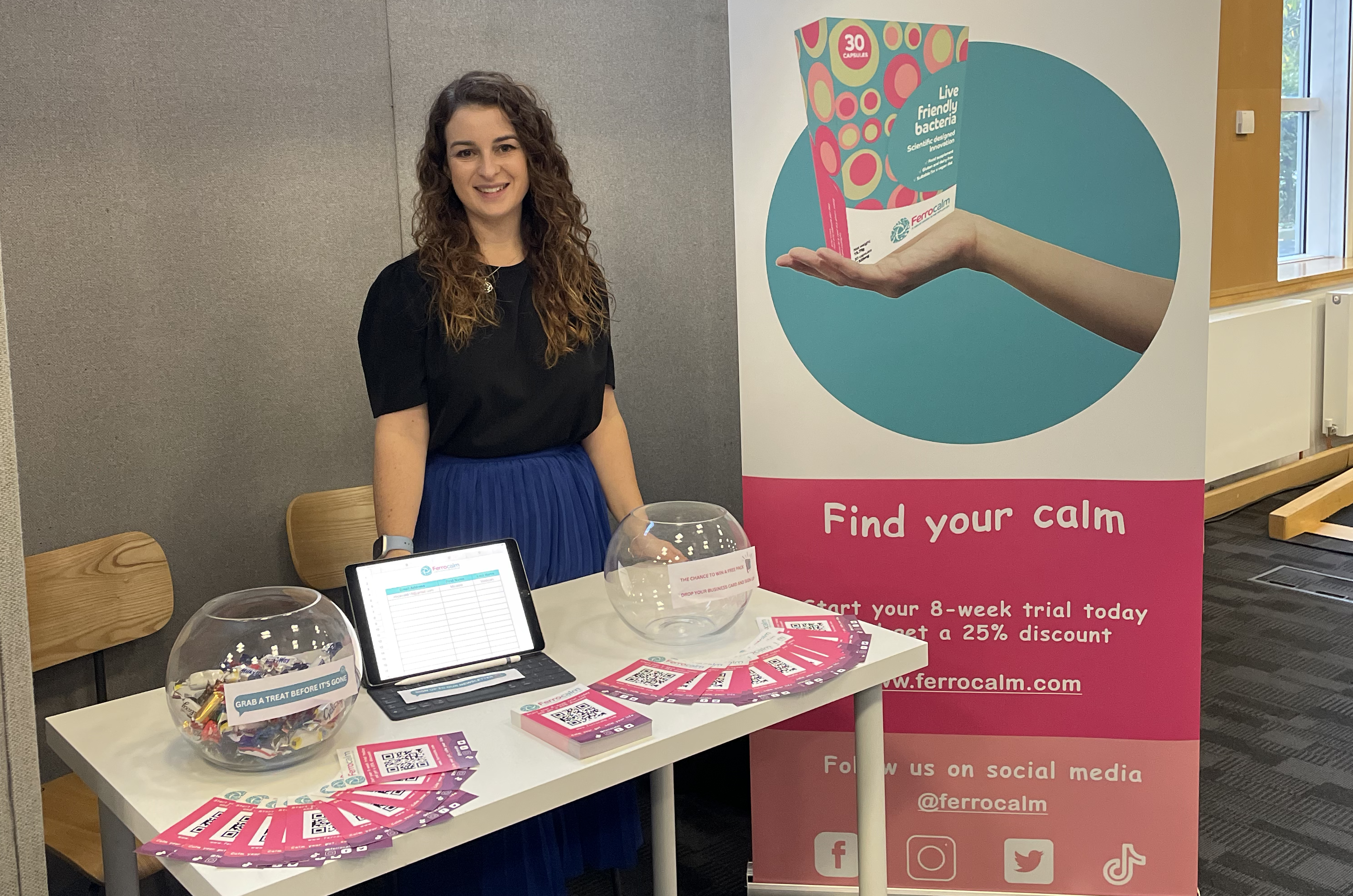
Biotech solution Ferryx received its £300k seed capital back in 2022. This startup is a key example of an organisation that isn’t entirely femtech focussed, but does solve a problem that women experience at an increased rate in comparison to men. “Approximately two-thirds of people with IBS are female. Additionally, women with IBS are more likely to have menstrual problems,” Jenny informs us.
“We have developed a product, Ferrocalm, which is the only probiotic which can calm your gut during periods of stress or when you have an active flare up of a condition such as IBS. This helps to improve quality of life and allows people to live the life they want to lead, without embarrassing gut health problems getting in the way.”
Being integral to the Bristol tech ecosystem, Jenny tells us she’s encountered a multitude of inspiring femtech organisations flourishing in the sector: “We have household names such as Elvie leading the way, closing followed by growing and emerging companies such as LatchAid (Anya), Forth, and Emm Technology.
“Bristol is a great place to be a female founder and perhaps this is why femtech is doing so well here. With programmes such as SETsquared Bristol’s “Enterprising Women” programme now in its fourth year, we are developing a community of female founders, many of whom are in the femtech space.”
In a similar space to Jenny, Sarah Bolt founded Forth with an ambition to help users optimise their health through biomarker tracking. The Chepstow-based health tech firm prepared to capitalise on the growth in the female science and technology market when it announced a further £1.6m funding in 2021 to support the launch of its ground-breaking female health product.
Sarah tells us, “Today, more and more people are realising that understanding and measuring your body’s biochemistry is key for a long and healthy life.
“For women, in particular, gaining a unique insight into how their hormone levels fluctuate throughout their unique cycle can give women the support they have been lacking and help to close the gender health gap.”
Elvie is the revolutionary global health and lifestyle brand developing iconic products for women. Elvie’s products include Elvie Trainer, a Kegel trainer to strengthen pelvic floors and Elvie Pump, a silent wearable breast pump. In October 2020, the company brought to market two new breastfeeding products, Elvie Catch and Elvie Curve.
Founded in 2013 by Tania Boler, Elvie brings together a team of world-class engineers, designers and business minds. Elvie opened its tech and product hub in Bristol in 2019. Since the launch of Elvie Pump on the catwalk of London Fashion Week in September 2018, Elvie has experienced hyper-growth. The business grew 6x in 2019 and almost doubled in 2020 – Elvie raised an astonishing £58m in 2021 to keep this growth on track.
Tania Boler, CEO and Founder of Elvie, says, “Elvie has already revolutionised every category it has entered – but we know that we have barely scratched the surface of what is possible for women’s tech.”
Also tackling the breastfeeding sector is Dr Chen Mao Davies, Founder, LatchAid. “Traditionally, the UK has one of the worst breastfeeding rates in the world, with the vast majority of women giving up before they want to,” explains Chen.
LatchAid’s pioneering app uses cutting-edge 3D interactive technology and 3D avatars to help new mothers intuitively learn breastfeeding skills. The app also connects breastfeeding mothers to virtual networks to provide close-knit peer-to-peer support groups.
These features, together with support from a highly empathetic AI-powered virtual chatbot, and live 1-2-1 support from human experts, provide breastfeeding mothers with personalised expertise and companionship, 24 hours a day 7 days a week, at what can be a challenging and difficult time.
A six-month NHS trial in 2022 found that, amongst the 271 UK-based survey respondents using the app, 49% were exclusively breastfeeding at 6-8 weeks, compared to a national average of 24%.
“I see a future where women work with, instead of against, their menstrual cycle – in their personal and professional lives.”
What can we do as a sector to continue this necessary growth? Both Hazel and Jade identify that we need to proactively, consciously and intentionally invest in femtech startups. Funding fuels innovation, so this is a bottom line requirement for ensuring development in the right direction.
They both also outline that there needs to be stronger awareness, support of and education about femtech solutions. In a similar ilk, Hazel calls for “Stronger collaborations between tech companies, healthcare providers, and research institutions,” whilst Jade adds that we need “more meetups and opportunities to meet other FemTech founders.”
Fundamentally, we need to keep furthering the conversation about the gender health gap, and as Hazel highlights, we need to advocate “for policies that support women’s health initiatives and build inclusive solutions addressing the diverse needs of all women.”
Building solutions from personal experiences
Arguably what makes these femtech organisations so successful and widely loved is the fact many of them were born from personal experiences. “After all, we have a unique insight into the health challenges faced by women, given our lived experience!”
Jade shares with us the story behind Flow with the Season’s inception: “Like 90% of women for most of my life, I experienced adverse symptoms linked to my menstrual cycle which affected my mood and energy levels and had an impact on my personal and professional life.
“I reluctantly accepted these symptoms as being an unavoidable consequence of having a reproductive system which was beyond my control.
“But shortly after my daughter was born I discovered Maisie Hill’s book: Period Power. This prompted me to start a daily journalling practice guided by my menstrual cycle. I began to notice patterns in my mood, behaviour and energy levels which coincided with each phase of my cycle.
“This realisation was a turning point for me. If my moods, symptoms and energy levels could be attributed to my fluctuating hormones then it meant I had the power to overcome them by making lifestyle adjustments to support my endocrine system.
“Using these insights I started to organise my personal and professional life to optimise my natural, innate energy cycles (aka Sync with my Cycle).
“As a result, my wellbeing and productivity soared.
“I began my journalling practice using pen and paper because I wanted to record custom data and journal without the distraction of the fertility focus of the period trackers currently on the market.
“But, pen and paper have their limitations! So digitising it became a priority to be able to use the power of AI (machine learning) for predictive analytics.
“And so, the idea for the Flow with the Seasons app was conceived.
“I see a future where women work with, instead of against, their menstrual cycle – in their personal and professional lives.
“A world where employers also recognise and make reasonable adjustments to accommodate this (knowing that their teams will be happier and more productive for it!) – Men have completely different hormone cycles to women (they cycle daily, whereas women have a monthly cycle) therefore, a working pattern that suits men, won’t necessarily work for women.
“Where girls are educated about their hormones, the impact of their lifestyle on their reproductive health, and how to support and sync with their cycle – all before they experience their first period. So that we can prevent hormone-related conditions (infertility, low mood etc) before they begin.”
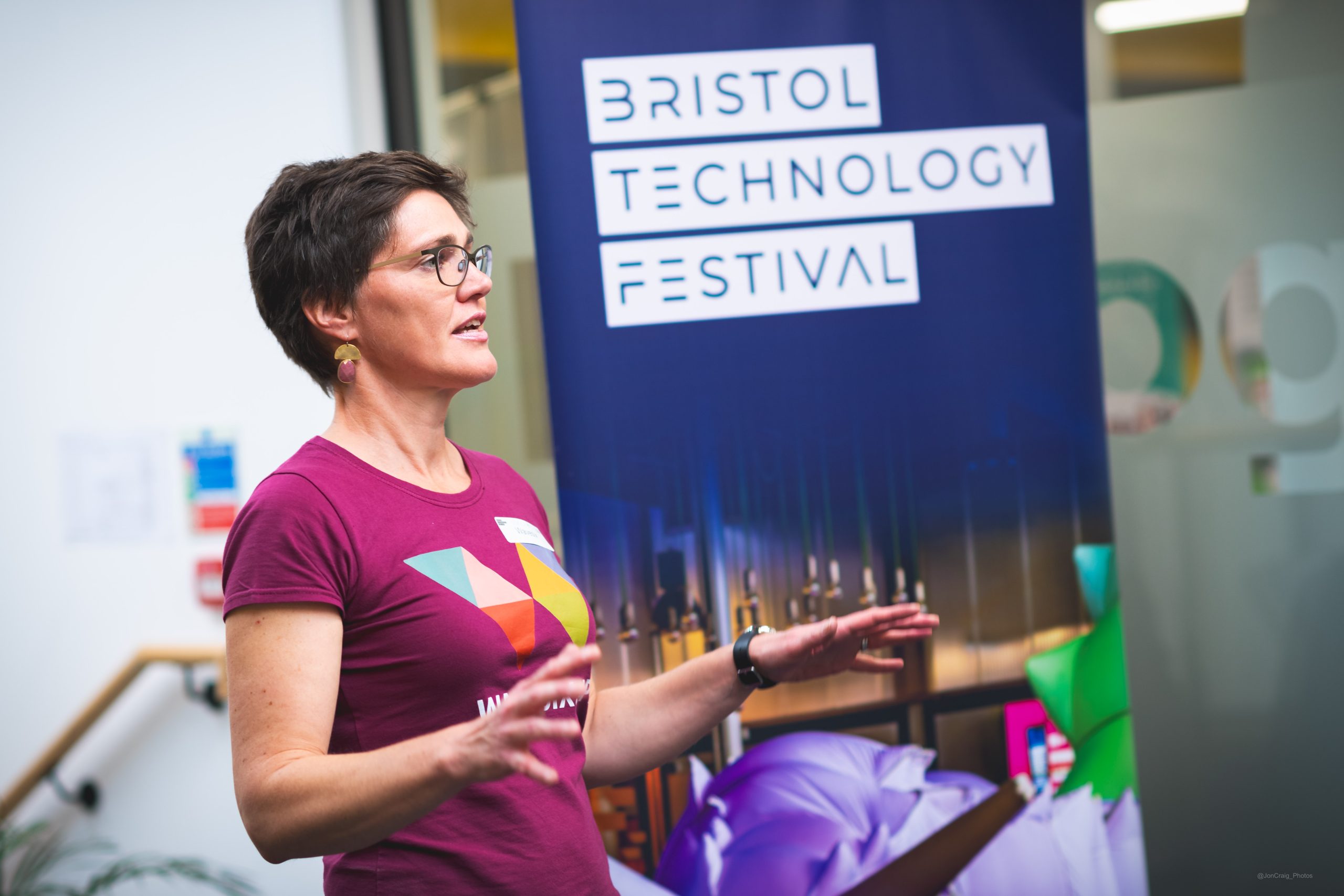
Similarly, Julia Marshall-Wessendorf, Founder & CEO at WAVESIX set out to solve her own problems. “I had health issues myself and was looking for a holistic lifestyle tracker to improve my health, but couldn’t find one, so WAVESIX came about,” Julia tells us.
“WAVESIX gives women the tool to track how their periods, pregnancies, breastfeeding or menopause affect various aspects of their lives. Also what impact sleep, nutrition, movement, relaxation, relationships and self have on their well-being. The feedback it provides empowers women to make lifestyle choices to improve their health and happiness.
“We live in a great time with many opportunities to harness the power of tech to help women. During my health journey I relied on a diary to keep notes of how I was feeling, what I was eating, whether I had my period and how energised I felt that day. It was impossible to collate all this data, so I always thought tech would be able to do that.”
Inspiring activity is taking place in the South West so far, and watch this space for much more to come.